
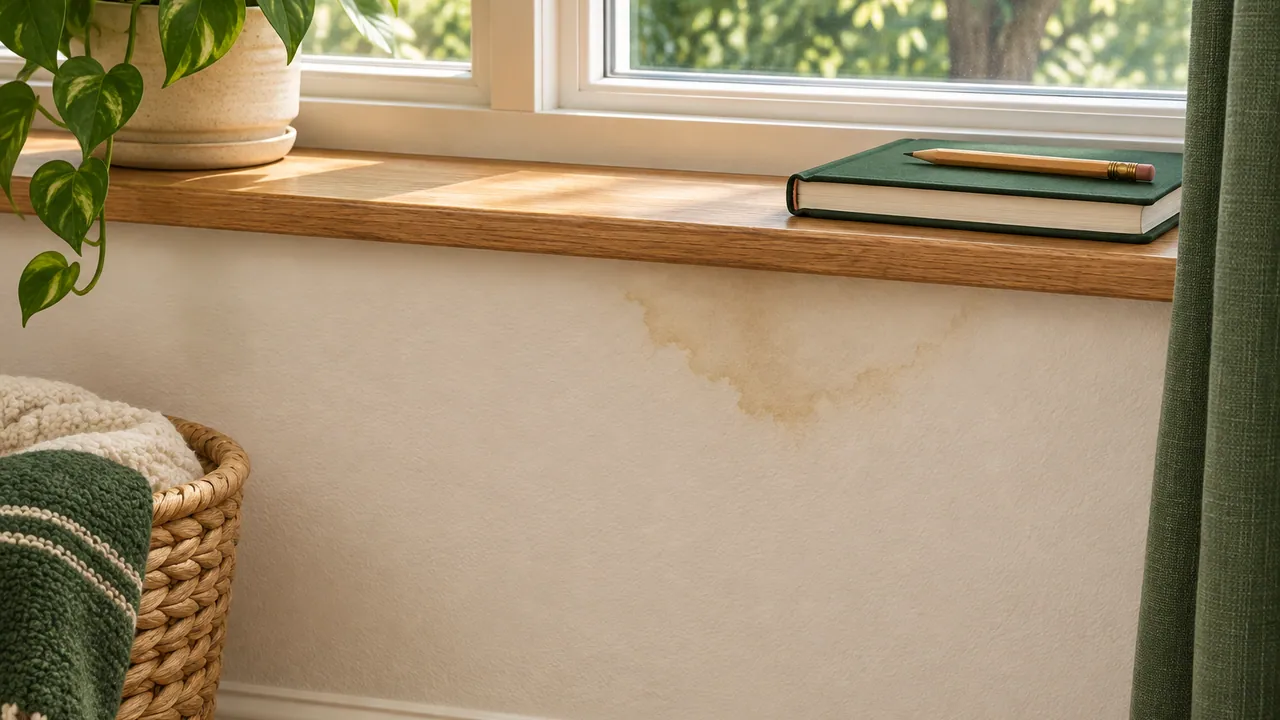
Before choosing a filler, ask a repair professional whether the wall is ready for patching. Explain what happened and what you have already done about the water source.
Explain what happened
Write down where you noticed the problem and whether you know where the water came from. Include any work already done to address it. If you do not know an answer, say so.
Take a wide photo of the wall and a closer photo of the affected area. Keep any earlier photos for comparison. There is no need to press, cut, or disturb the wall to prepare these pictures.
Ask about the next step
Before agreeing to cosmetic work, ask:
- Does the wall need further assessment before patching?
- Who will check whether it is ready for the proposed repair?
- Does the requested work include preparation and painting?
- Are any other specialists needed before work begins?
Describe visible marks or anything else that concerns you. Ask the person handling the assessment to explain the proposed sequence.
Discuss filler after assessment
DAP describes spackling as a filler for holes, dents, and cracks in drywall or plaster. Its guide recommends lightweight spackling for small nail holes and shallow dents, with heavyweight or hybrid options for larger or deeper repairs.
That guidance helps with filler selection. It does not establish whether a particular water-affected wall is ready for a cosmetic repair. Ask for that decision before selecting a product.
Send the details together
Send a wall photo and tell us what you know about the water source, drying and earlier repairs when you ask about drywall repair.